

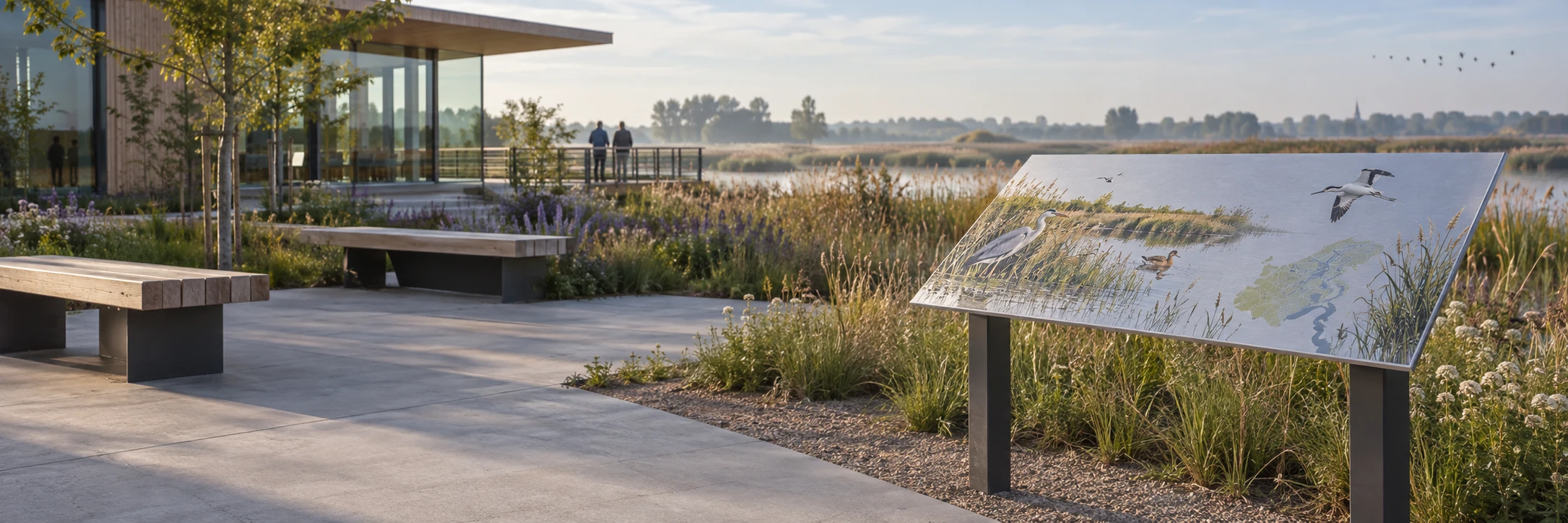
Strong metal. A lasting message.
Durable printed aluminium.
An information board along a trail, a distinctive entrance or an identification plate on a machine. Give your message a metal base, with the print protected within the anodised layer.
Print that becomes part of the surface
For information you want to keep.
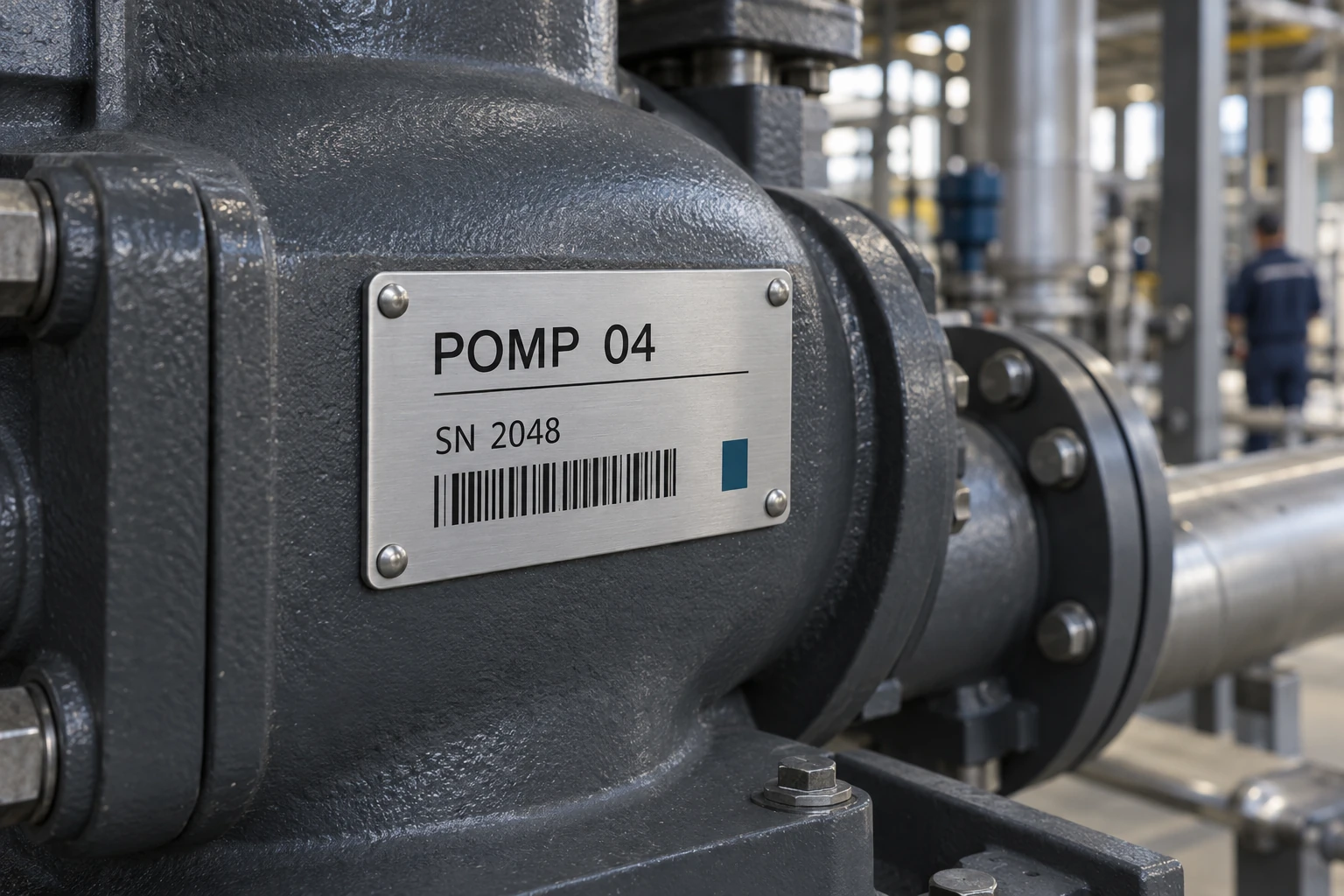
Some information needs to be available every day. For visitors on a site, engineers working on equipment or people using a control panel. Design, contrast and material deserve equal attention.
This technique introduces colour into the open anodised layer, which is then sealed. BlinkOut turns your information into a suitable sign, label or panel, including design, machining and fixing.
From outdoor signs to equipment identification.
Suited to outdoor use
UV-resistant print for locations exposed to daylight and weather. We match the specification to the setting and intended use.
A wear-resistant surface
The sealed print resists scratches and solvents. For intensive cleaning, we discuss the products and conditions in advance.
Individual data on each piece
Numbers, text and barcodes can vary between items. Useful for a series in which every plate serves its own purpose.
How the technique works
Colour within the surface. Then sealed.
The anodised layer is a protective oxide layer on the aluminium. It remains porous during printing.
- 01
Open anodised layer
The prepared aluminium has a porous surface that can absorb colour.
- 02
Digital printing
The design is introduced into the open layer, creating the image within the surface.
- 03
Sealing
The pores are closed, locking in the colour and protecting the print.
Products, applications & audiences
What should your aluminium communicate?
From outdoor information to interiors and equipment: these design examples show four possibilities. Tourist information boards, trail maps and pictogram signs are also possible.
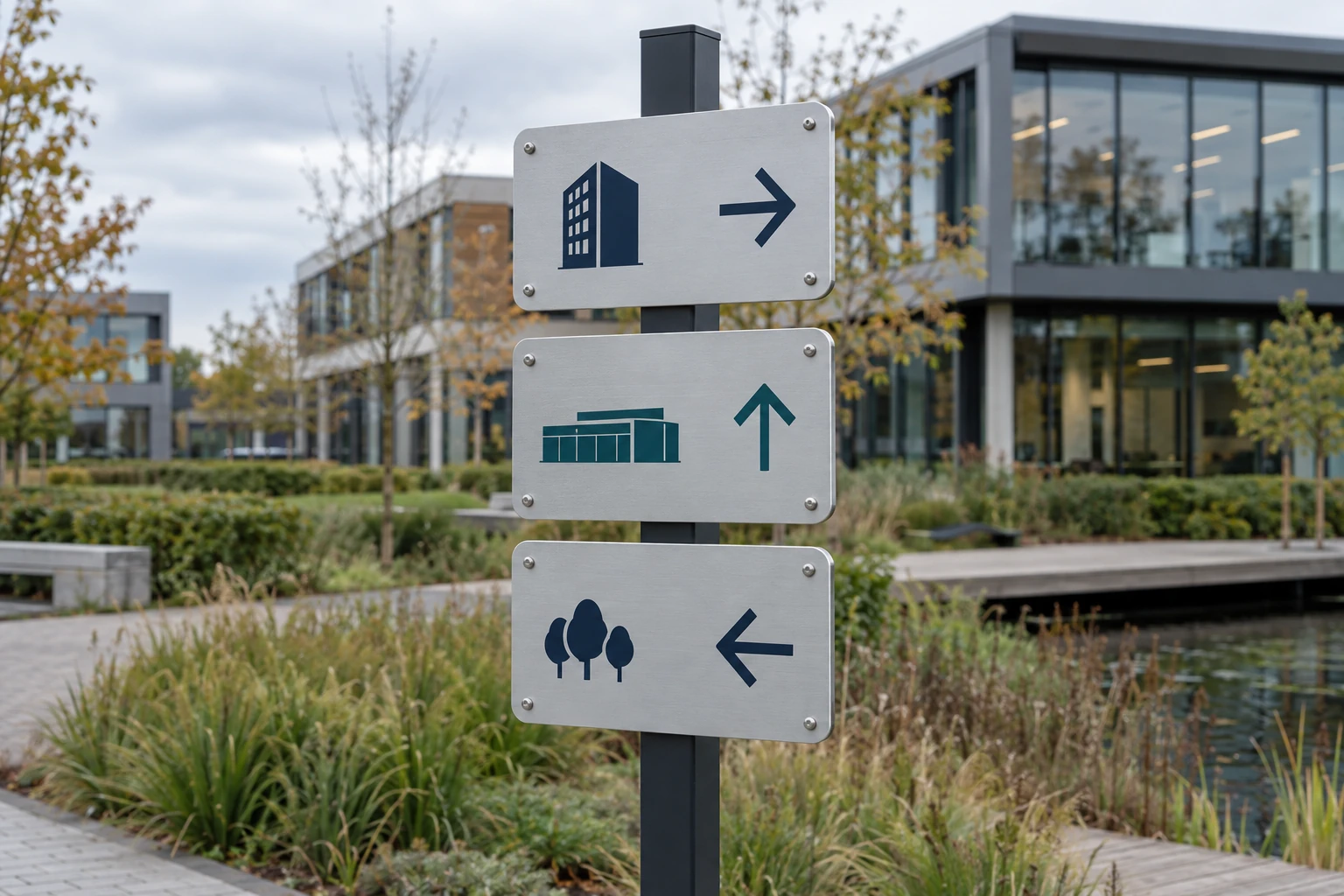
Business parks · councils · leisure
Wayfinding & site information
Help visitors find the right entrance, department or route. We bring destinations, arrows and pictograms together in a consistent family of signs.
Discuss this applicationMachine builders · installers · maintenance teams
Nameplates, rating plates & labels
Give equipment a fixed identity with model details, serial numbers or a barcode. Supply the variable data in a structured list; we agree the layout and checking process.
Discuss this application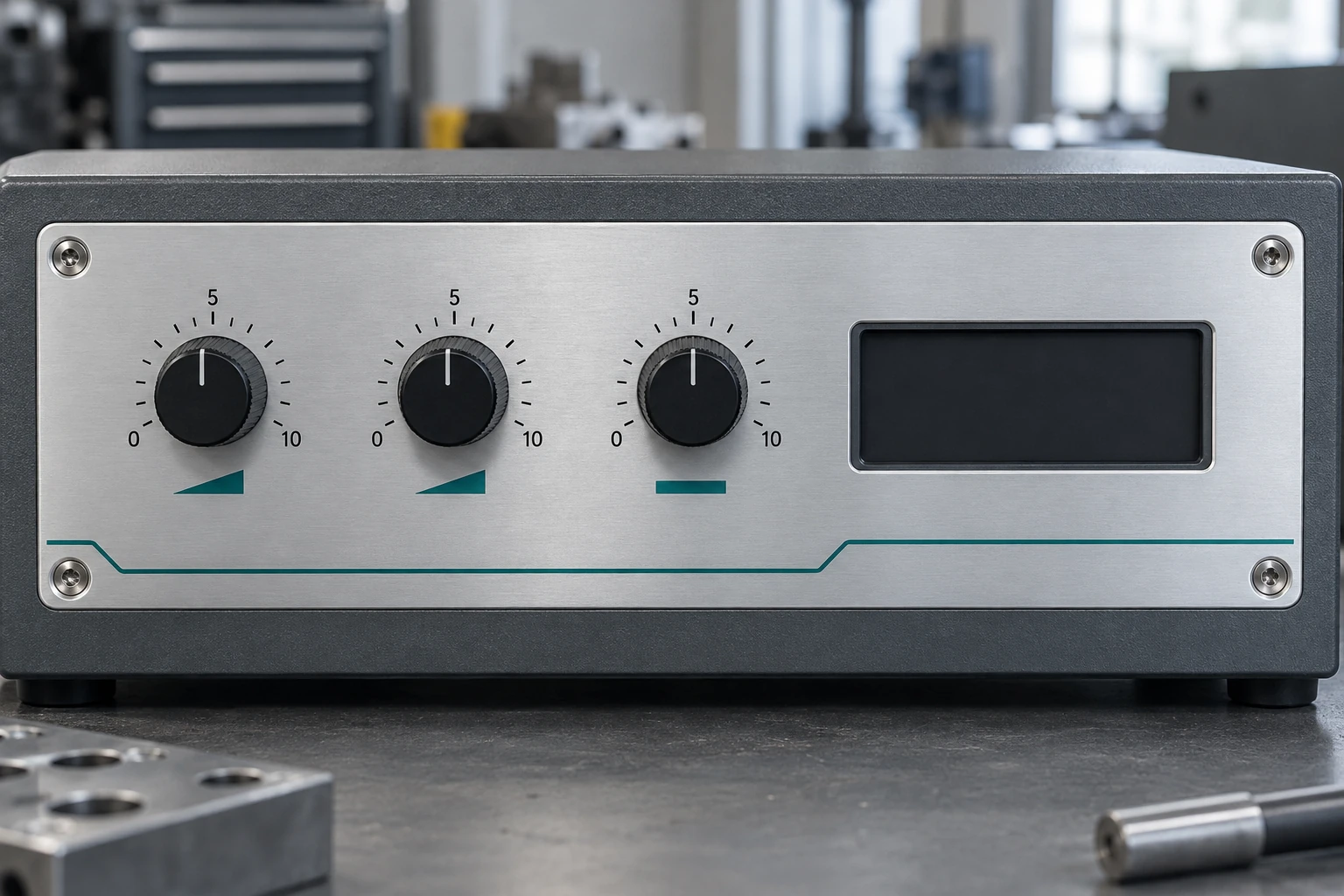
Equipment manufacturers · industry · integrators
Front panels & control panels
Combine scales and control symbols with holes and cut-outs for components. We develop positions and dimensions from your technical drawing.
Discuss this application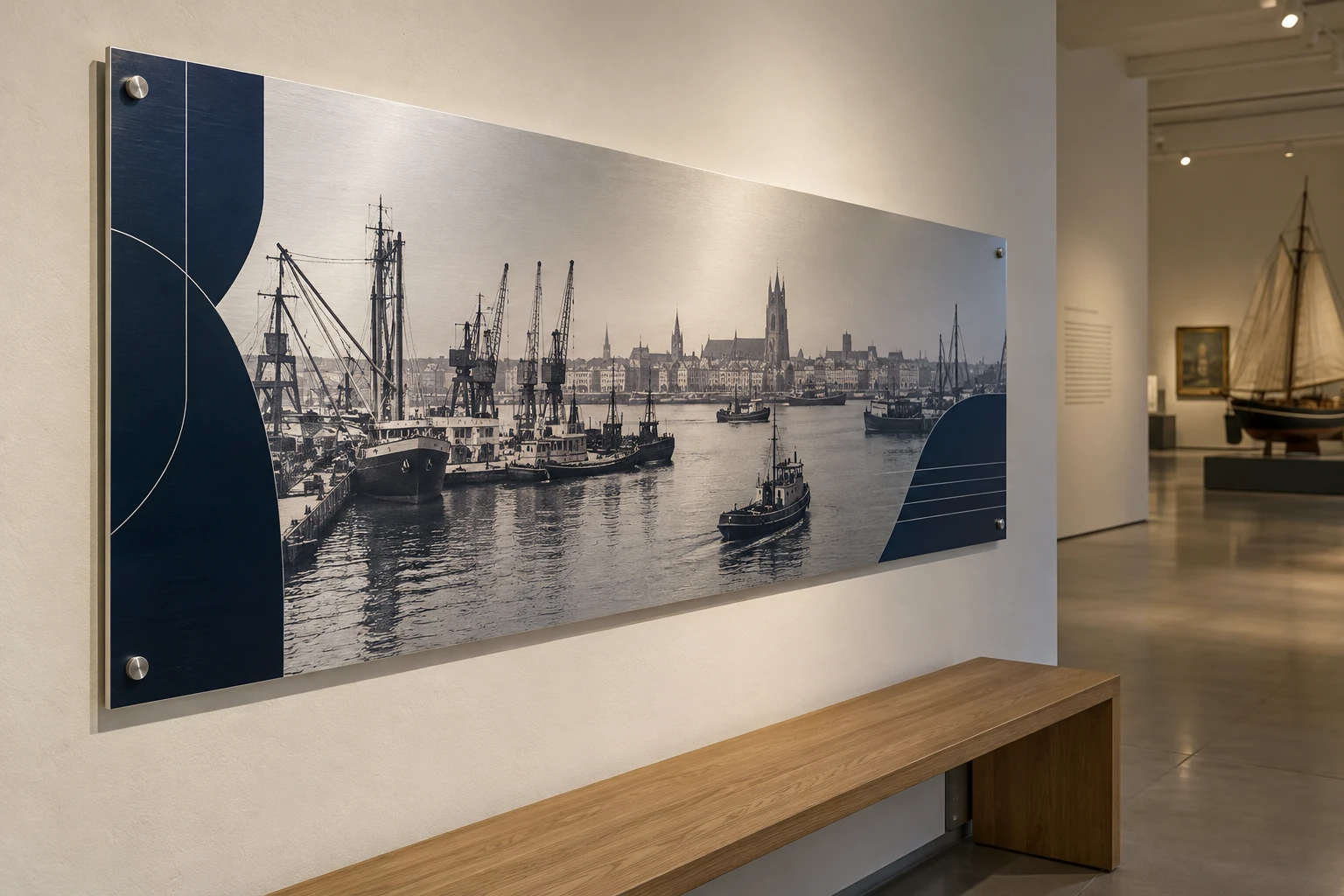
Museums · visitor centres · commercial interiors
Image panels & displays
Present photography, illustrations or a story on a metal panel. We help you consider viewing distance, lighting, size and a fixing method suited to the space.
Discuss this applicationTechnical features
From sheet selection to print detail.
Agree the material, dimensions and finish together. A thin identification plate needs different support from a larger freestanding sign.
- Material & technique
- Anodised AlMg3 aluminium, printed within the anodised layer and then sealed.
- Thicknesses
- Common sheet thicknesses for signs: 1 / 1.5 / 2 / 3 mm. Selection depends on size, support and application.
- Print options
- Full colour up to 1400 × 1400 dpi. Single- or double-sided, with variable text, numbering and barcodes also possible.
- Shape & machining
- CNC machining, contour shapes, rounded corners, fixing holes and cut-outs. Edge finishing to the agreed drawing.
- Size
- Agree dimensions for each product. Front panels can be made up to 1970 × 970 mm in one piece, depending on the specification.
- Fixings
- Fixing holes, stand-offs or a suitable adhesive fixing. The substrate and loading determine the choice.
Considered choices
Durable in use. Thoughtful in material.
Designing for long use
Keep the message timeless where possible. A clear layout and an appropriate surface help information remain useful.
Recovering aluminium
Aluminium can be recovered through metal recycling. Removable fixings help separation; adhesives and other components need consideration during processing.
An evidenced choice
Match size, quantities and fixings to the intended life of the application. We only specify recycled content or a carbon benefit with product-specific evidence.
From information to a finished panel.
- 01
Purpose & setting
Share the application, quantities, dimensions and a photo or drawing of the location.
- 02
Design & proof
We develop the artwork, data, contrast and machining details, and discuss the proof.
- 03
Print & machining
After approval, printing, sealing and the agreed machining are carried out.
- 04
Delivery & installation
We agree the fixings, delivery or installation and maintenance with you.
Give your artwork a good start.
Print-ready files
Supply a PDF at actual size, with CMYK colours and fonts converted to outlines. For images, 300 ppi is a starting point.
Contours & details
Allow 2.5 mm bleed. Minimum line width: 0.2 mm. Mark holes, cut-outs and machining contours separately.
Data & checking
Supply numbering or label data in a structured list. We discuss legibility and checking codes on the selected specification.
Your information, made to last
What would you like to put on aluminium?
Send your idea, dimensions or technical drawing. From Roosendaal, BlinkOut helps with design and production, from an identification plate to a series of information boards.
- Application, size and quantities
- Artwork, drawing or variable data
- Location, fixings and required finish
Request your proposal
Questions about printed aluminium
Is this a sticker on aluminium?
For this specification, the colour sits within the anodised layer and is locked in after printing. No printed sticker is applied to the image face.
Can it be used outdoors?
Yes, this printing technique is suitable for outdoor use. We consider the location, cleaning and fixings when selecting the product.
Why does white look different?
No white ink is applied. Unprinted areas retain the aluminium colour. We therefore discuss colour reproduction on metal, ideally using a sample when this matters.
Can each plate have different data?
Yes, for example an individual number, text or barcode. A suitable data file and an agreed checking process are important.
Does durable mean an environmental claim?
The name refers to a specification intended for long use. Aluminium can be recovered through metal recycling. We only promise a particular recycled content, certification or carbon reduction with evidence for the selected product.
How do I choose the right thickness?
Size, support, fixings and use determine the thickness together. Send a drawing or location photo so we can agree those details.