

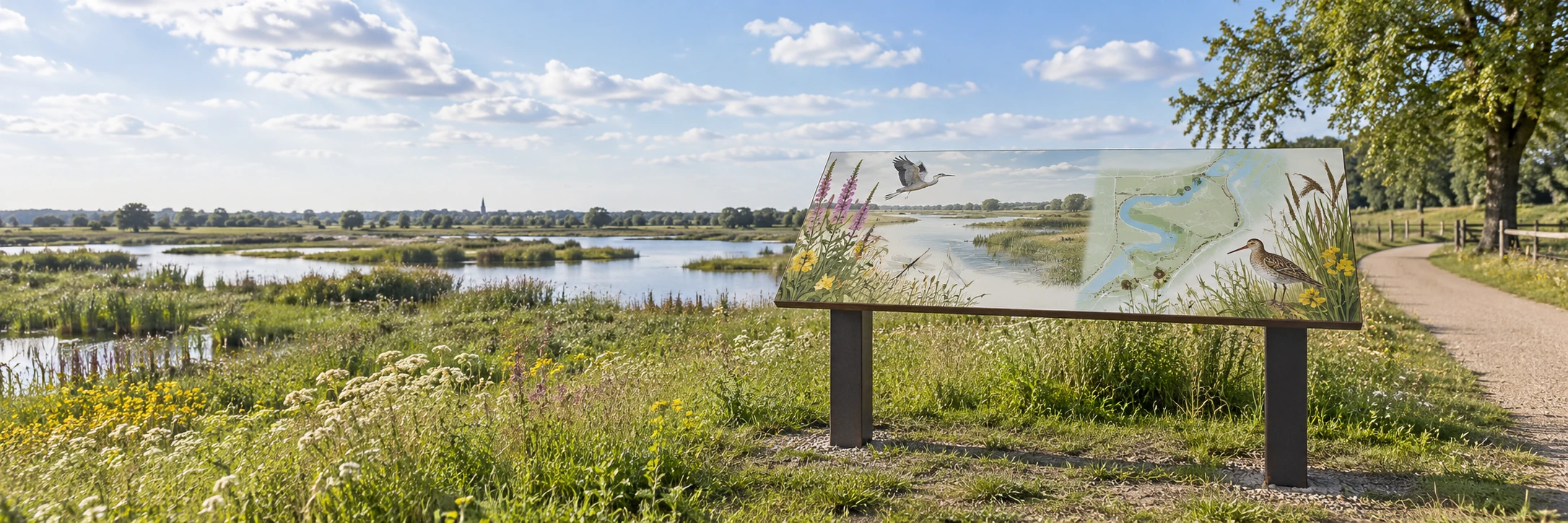
Your design. Built into the material.
Ultra-durable HPL panels.
From an outdoor information board to a distinctive facade: give your design a robust, low-maintenance foundation. With the image incorporated into the panel during manufacture.
Compact HPL with your own design
Made to stay visible.
A trail map that guides visitors. A facade that identifies your organisation. Or a play and information panel that people touch every day. In places exposed to frequent use, sunshine or weather, performance matters alongside the design.
These compact high-pressure laminate panels combine a rigid core with an integrated design and a protective surface. BlinkOut helps with artwork, material selection, machining and suitable fixings.
A tough surface. A considered construction.
UV and weather resistance
For long-term applications exposed to sunshine, rain, frost and sandy or salty conditions. A 10-year warranty against UV-related colour change is available, subject to the selected product’s terms.
Designed for frequent use
The dense surface resists scratching, water and graffiti. The rigid core makes the material useful in public spaces where panels face demanding everyday use.
Your design within the panel
Photographs, illustrations, route maps or brand colours become an integrated decorative layer. Straight panels, cut-out shapes and single- or double-sided designs are possible.
The construction
The image sits within the board.
Multiple resin-impregnated paper layers are consolidated under heat and pressure to produce compact HPL. The design becomes part of the panel’s construction during this process.
Protective surface
A melamine resin layer protects the image side against UV exposure, scratching and dirt.
Integrated decorative layer
The image is incorporated as an underlying layer during pressing, becoming part of the laminate.
Rigid compact core
Kraft paper layers with phenolic resin form the dense, rigid core. The standard core colour is brown.
Applications and audiences
One material. Many possibilities.
Choose a product suited to its location and use. These design examples show how HPL can be applied.
Councils · land managers · leisure
Information, trails and wayfinding
Tourist information boards, walking and cycling maps, street-name signs, directional signs and golf or sports trail boards. For identification and information in public spaces.
Discuss this application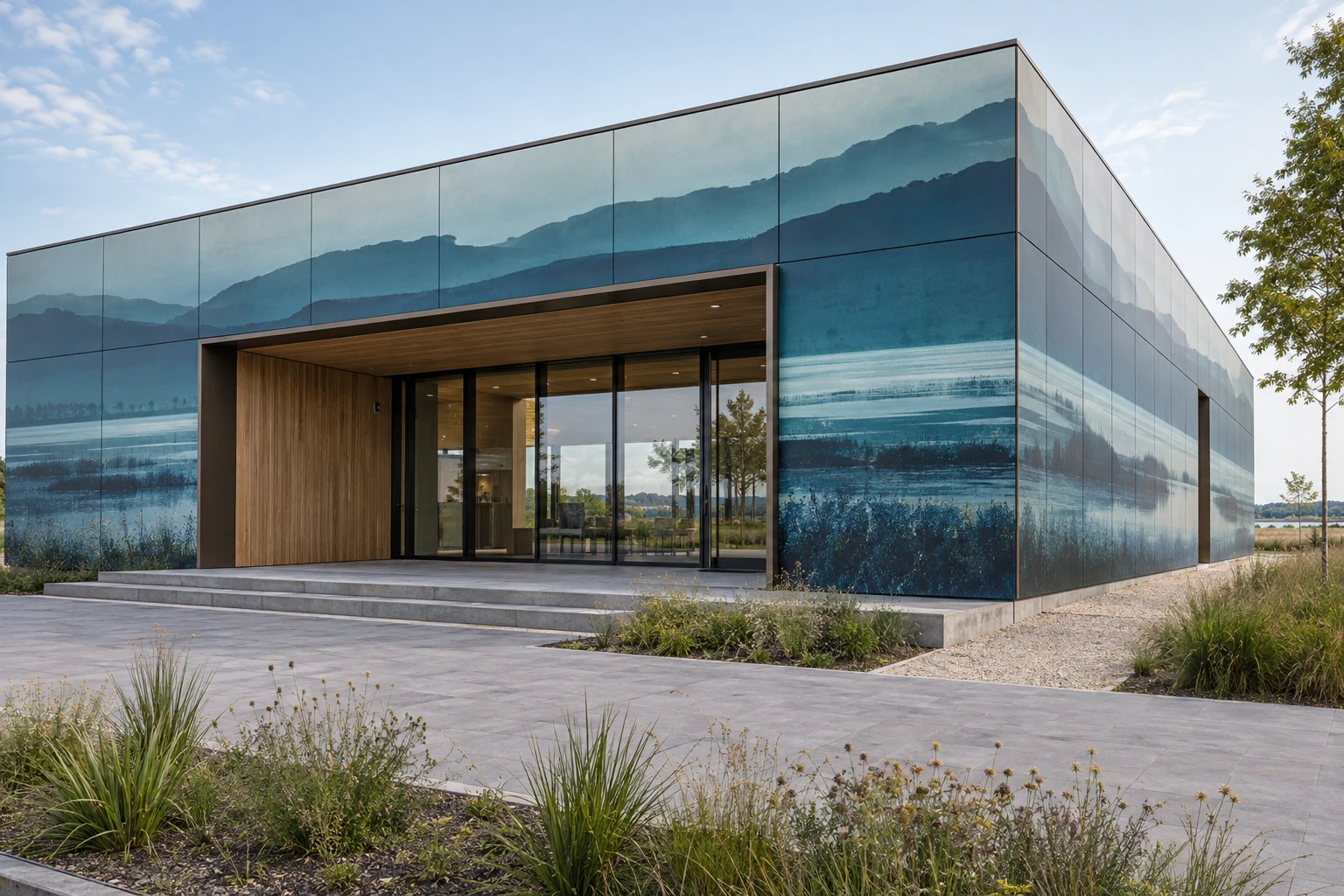
Architects · property teams · businesses
Facade panels and canopies
A bespoke image for an entrance, facade or canopy. Panel layout, fixing and the required fire performance are coordinated with the building and the selected system.
Discuss this application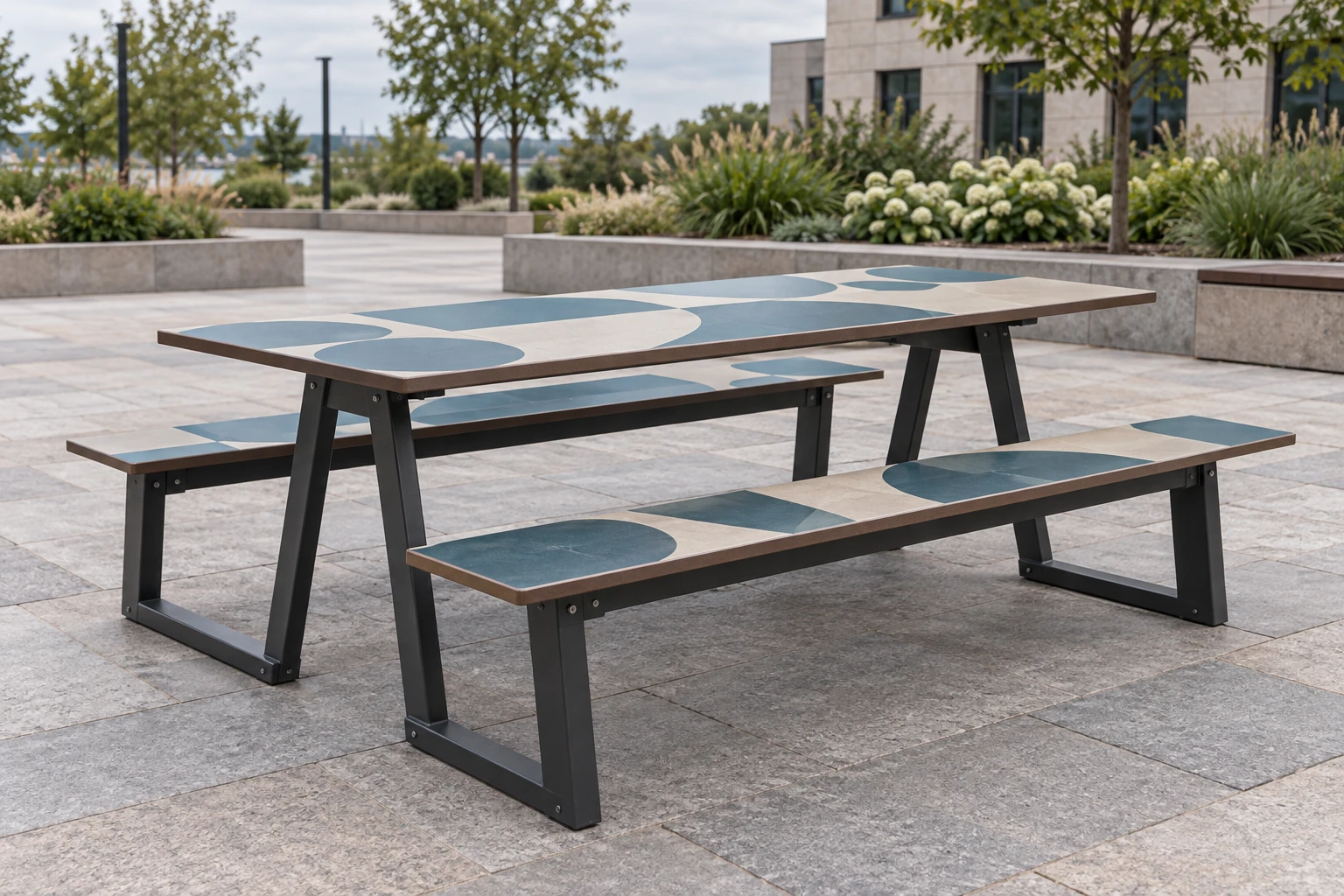
Hospitality · campuses · park managers
Tabletops and street furniture
Printed tabletops, bench panels and outdoor furniture components. The design complements its surroundings; spans and support arrangements help determine the required thickness.
Discuss this application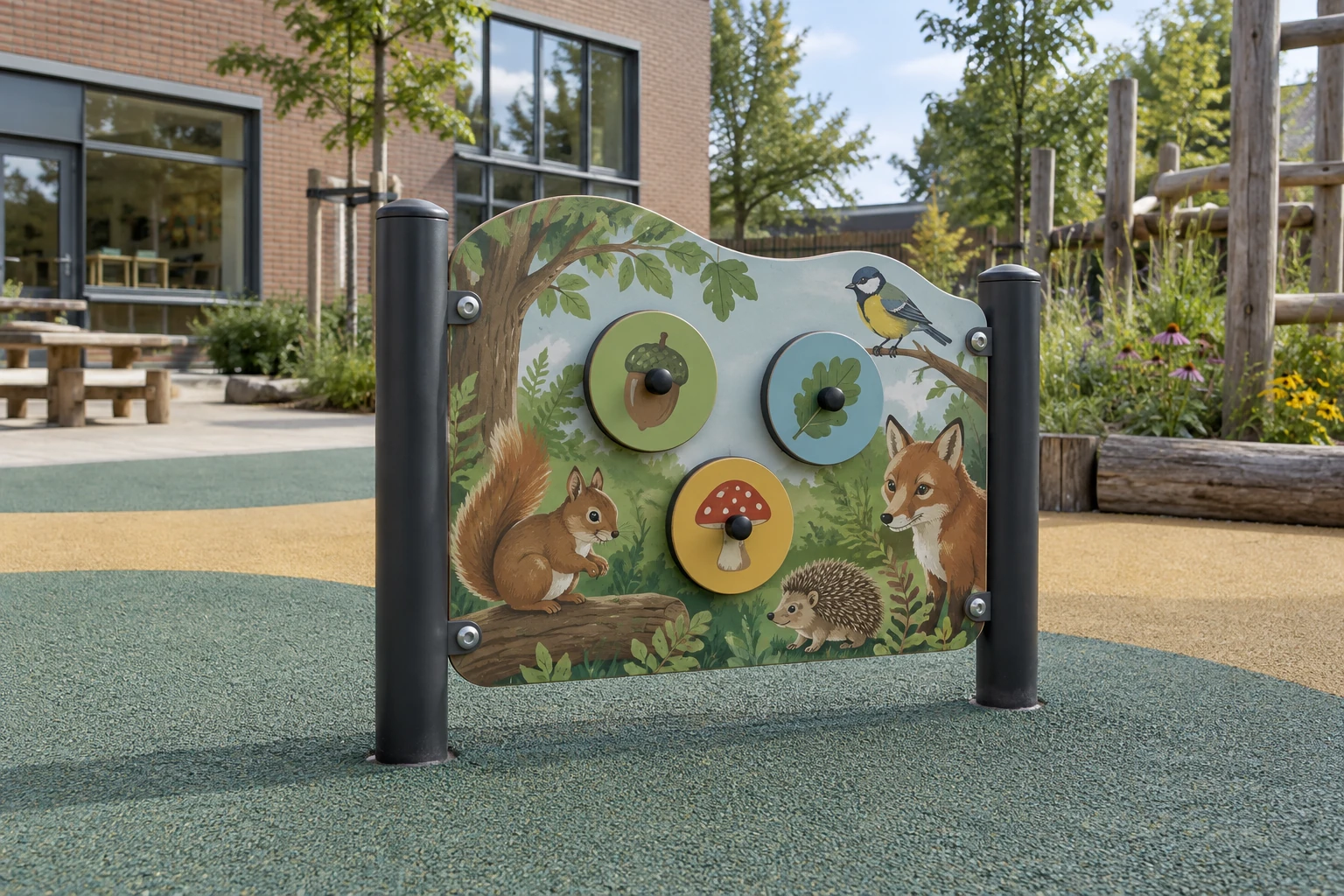
Schools · holiday parks · attractions
Play and learning panels
Cut-out play panels, discovery boards and themed components. Rounded shapes, edges and fixings are developed for their use; the complete play installation needs its own assessment.
Discuss this application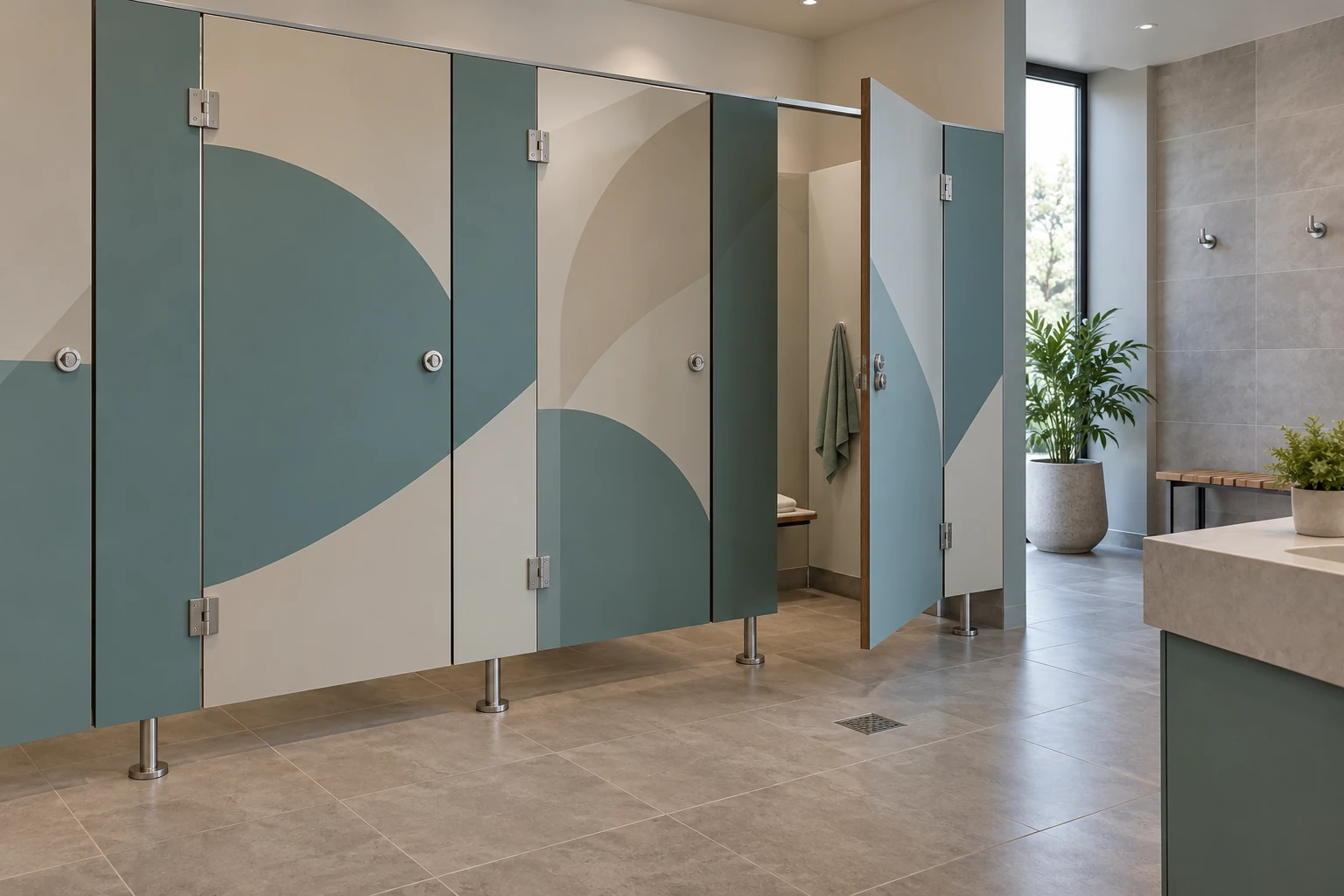
Sports venues · leisure · public buildings
Washroom and functional panels
Partitions, doors and interior components with a bespoke finish. The water-resistant surface and straightforward routine cleaning suit spaces used frequently.
Discuss this applicationMuseums · visitor centres · exhibitors
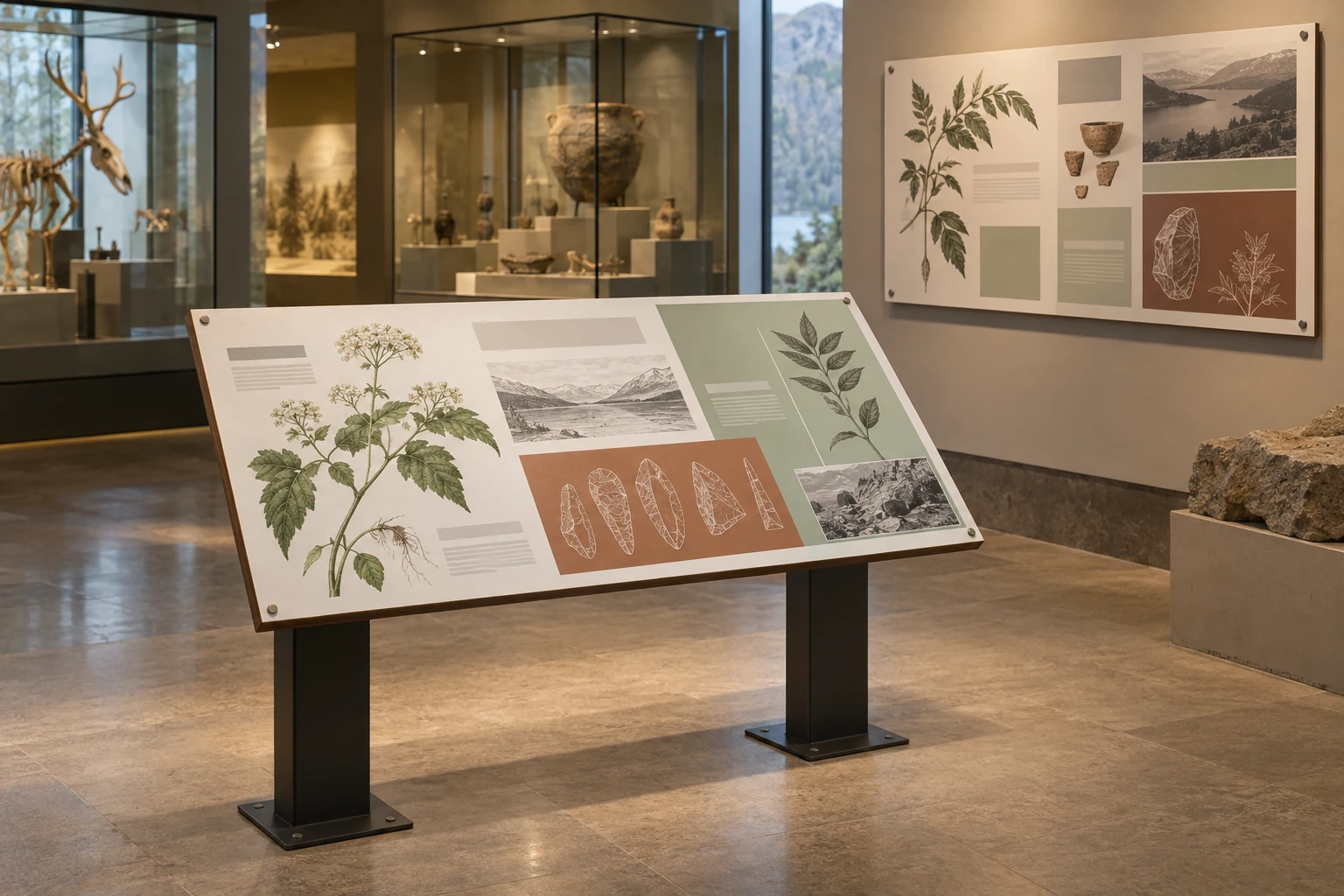
Museum panels and scenery
Interpretation tables, wall panels, themed scenery and public displays. Combine photography, illustrations and information in a robust finish for a long-term installation.
Discuss this applicationTechnical characteristics
Match the specification to the demands.
Thickness, weight and fixing work together. We assess dimensions, support and use before arranging production.
| Panel thickness | Indicative weight |
|---|---|
| 3 mm | 4.5 kg/m² |
| 6 mm | 9 kg/m² |
| 10 mm | 15 kg/m² |
| 13 mm | 19.5 kg/m² |
Thickness tolerance: 0.5 mm. Thinner or alternative specifications can be discussed on request. Fixings and substructure add to these weights.
- Maximum panel size
- Up to 1300 × 3000 mm; final dimensions and layout depend on the selected specification.
- Finish and image
- Satin finish, standard brown core. Full colour in CMYK, single- or double-sided.
- Machining
- Sawing, contour routing, drilling and engraving. Holes and edge finishing can be prepared.
- Threaded inserts
- M6 inserts from 10 mm panel thickness; the artwork specification requires at least 20 mm from the insert centre to the edge.
- Material standard
- HPL to EN 438-1 and EN 438-2. Discuss the documentation required for your application.
- Fire classification
- Specifications with M1 or M2 classification are possible. Agree the appropriate product and supporting report in advance where a project requires this.
Considered material use
Recycled paper as a foundation. Long use as a starting point.
The kraft paper core gives existing fibres another use. For supply with an FSC Mix claim, we agree the product claim and accompanying delivery documentation in advance.
A hard-wearing surface, appropriate maintenance and a well-chosen construction help panels remain useful for longer. We consider efficient sheet layouts and fixings that allow complete panels to be replaced or reused.
The end of use matters too: discuss reuse and local processing options. Energy recovery is one possible treatment route for discarded HPL panels.
From artwork to a panel ready for installation.
- 01
Location and use
Share dimensions, photographs, the intended application and any fire-performance or fixing requirements.
- 02
Design and detailing
We develop the image, panel layout, contours, holes and edge finishing.
- 03
Manufacture and machining
Following approval, the design and core are consolidated and the agreed machining is completed.
- 04
Delivery and installation
We coordinate the substructure, fixing method and programme, and discuss maintenance.
Robust material, practical to use.
Routine cleaning
Water and soap are suitable for ordinary dirt. Stubborn marks and graffiti require a cleaner and method suited to the selected finish.
Appropriate fixing
Thickness and span determine support requirements. Screws, inserts or a suitable adhesive system are agreed for the application.
Preparing your artwork
A vector file or print-ready PDF is preferred. For photographs, we discuss resolution at final size and bleed around the routing outline.
Make a lasting impression
What would you like to create with HPL?
From one information panel to a coordinated set of facade or site panels: send your idea and location photographs. BlinkOut helps from Roosendaal with design, materials and production.
- Application, dimensions and quantities
- Artwork or design idea
- Fixing, location and project requirements
Request your proposal
Questions about HPL panels
What is compact HPL?
HPL stands for High Pressure Laminate. Compact HPL consists of resin-impregnated paper layers consolidated under heat and pressure into a rigid compact board.
Is the image an applied film?
The design is incorporated as a decorative layer during manufacture. The surface protects the underlying image.
Which thickness do I need?
It depends on dimensions, application, support and loading. Common specifications are 3, 6, 10 and 13 mm. M6 inserts require at least 10 mm.
Can I use HPL outdoors?
Yes, these panels are intended for long-term indoor and outdoor applications. The specification, location and fixings are coordinated with sunshine, moisture and other site conditions.
What does the UV warranty cover?
A 10-year warranty against UV-related colour change is available. The precise terms and cover depend on the selected specification and are agreed with the quotation.
Are the panels sustainable?
The core contains around 70% recycled kraft paper and supply with an FSC Mix product claim is possible. Service life, sheet layout, maintenance and end-of-use processing also matter. The FSC claim is agreed for each delivery.
Can I choose any shape and image?
Contour routing, holes and single- or double-sided images are possible within material and production limits. We check fine details, internal corners, colours and bleed before manufacture.