

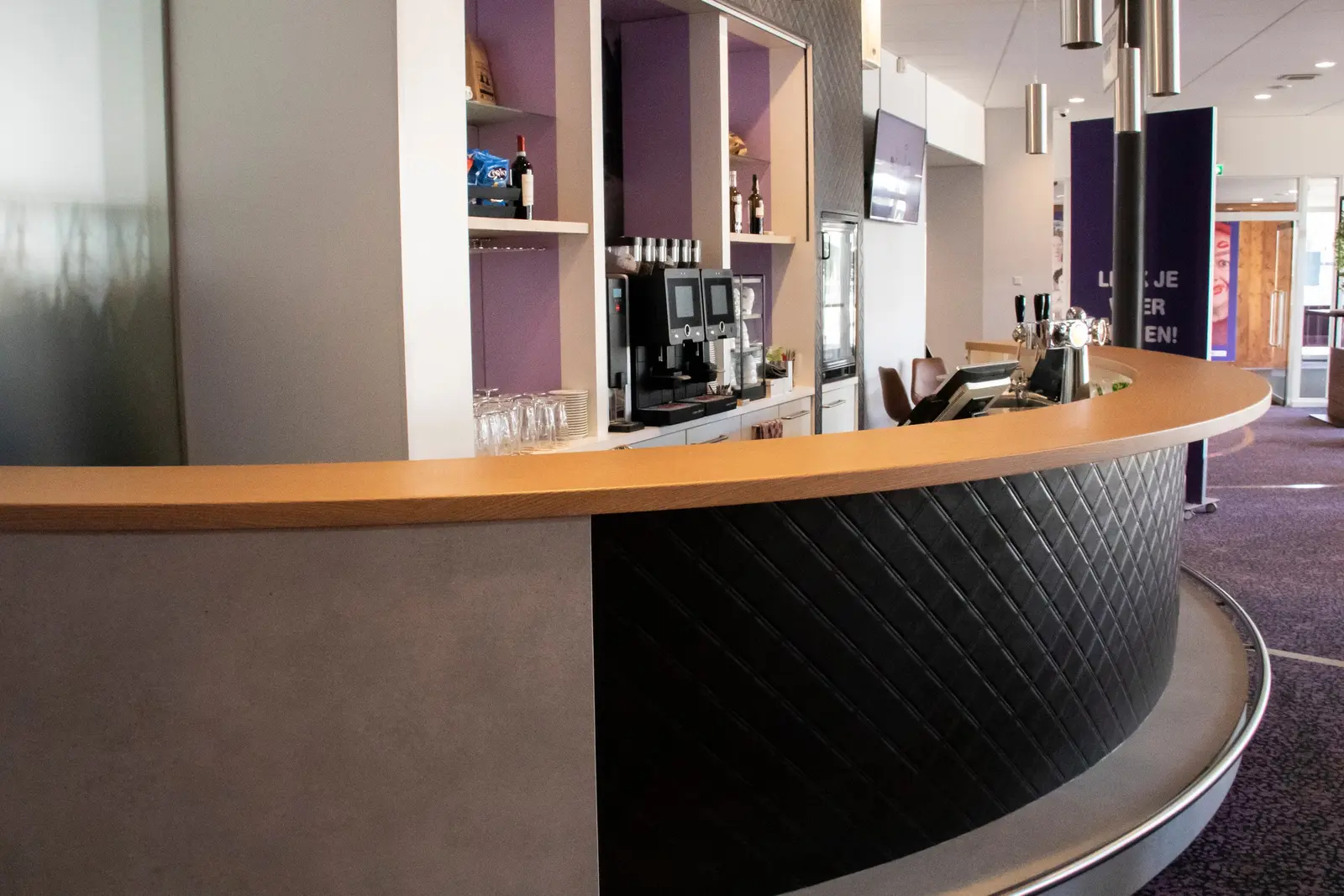
A tired reception counter: wrap it or replace it?
Could interior film refresh your counter? Learn how to assess fronts, edges and worktops, illustrated by the refurbished bar at Theater De Kring.
Walk into a theatre foyer and the bar front catches your eye. The joinery behind it may still have years of useful life. At Theater De Kring in Roosendaal, BlinkOut refinished existing bar surfaces and panels with wood-effect interior film. How do you decide whether the same approach suits a shop counter or hotel reception desk?
Start with what is worth keeping
Walk around the counter with the person who maintains it. Does the cabinet door close properly? Is the board beneath the edge trim firm and flat? Is the existing finish secure? If the structure is sound and the colour is dated, refinishing can extend the use of the existing joinery. The material retained is something you can actually identify: the counter stays in place.
Wrap now, repair first or replace a panel?
A smooth, firmly bonded front is a candidate for a trial piece. Deep damage, a loose coating or lifting film calls for preparation before a new finish is applied. A swollen board or a counter at the wrong working height needs a different intervention. Replacing one damaged panel and refinishing its neighbours may be a sensible combination.
The visitor side and the working side may need different finishes
A visitor sees grain and colour. A member of staff puts wet glasses on the top, nudges a door open with a crate and cleans the edge at closing time. Walk through those actions together. A flat front panel might suit a decorative finish while a corner by the sink needs repair first. Break the quotation down into fronts, doors, edges, plinths and worktop. This gives you a proposal for each surface and lets you make a precise decision about what to retain.
What happens to an older layer of film?
Leave a loose edge in place until the installer can see which layer is separating. Is adhesive left on the board, is paint lifting with the film, or is the substrate damaged? The answer changes the preparation needed. Ask which stripping, cleaning and repair work is included in the quotation.
Use the sample to settle the details
Choose a corner exposed to both daylight and artificial light. On a loose panel or agreed trial area, check how the grain travels across the front and around the return. View the joint straight on and then from the queue. On a row of cupboard doors, grain running in different directions can look distracting. Photograph the agreed direction and number the doors before removing them. The person refitting the furniture then has a reference.
What makes refurbishment a sustainable choice?
Describe what will physically remain in use. A counter might retain its carcass, hinges and front panels while one water-damaged plinth is replaced. When comparing that option with new joinery, include disposal, dismantling, temporary storage and any hours the facility must close. The area of film alone tells you little about the difference between the two options. A quotation that identifies retention, repair and replacement separately helps both the buyer and the facilities manager make a decision.
If your purchasing brief also specifies PVC-free materials, compare PVC-free interior film with the finish on your sample. Ask which option suits the edges and cleaning routine of this particular counter.
Why sample a corner?
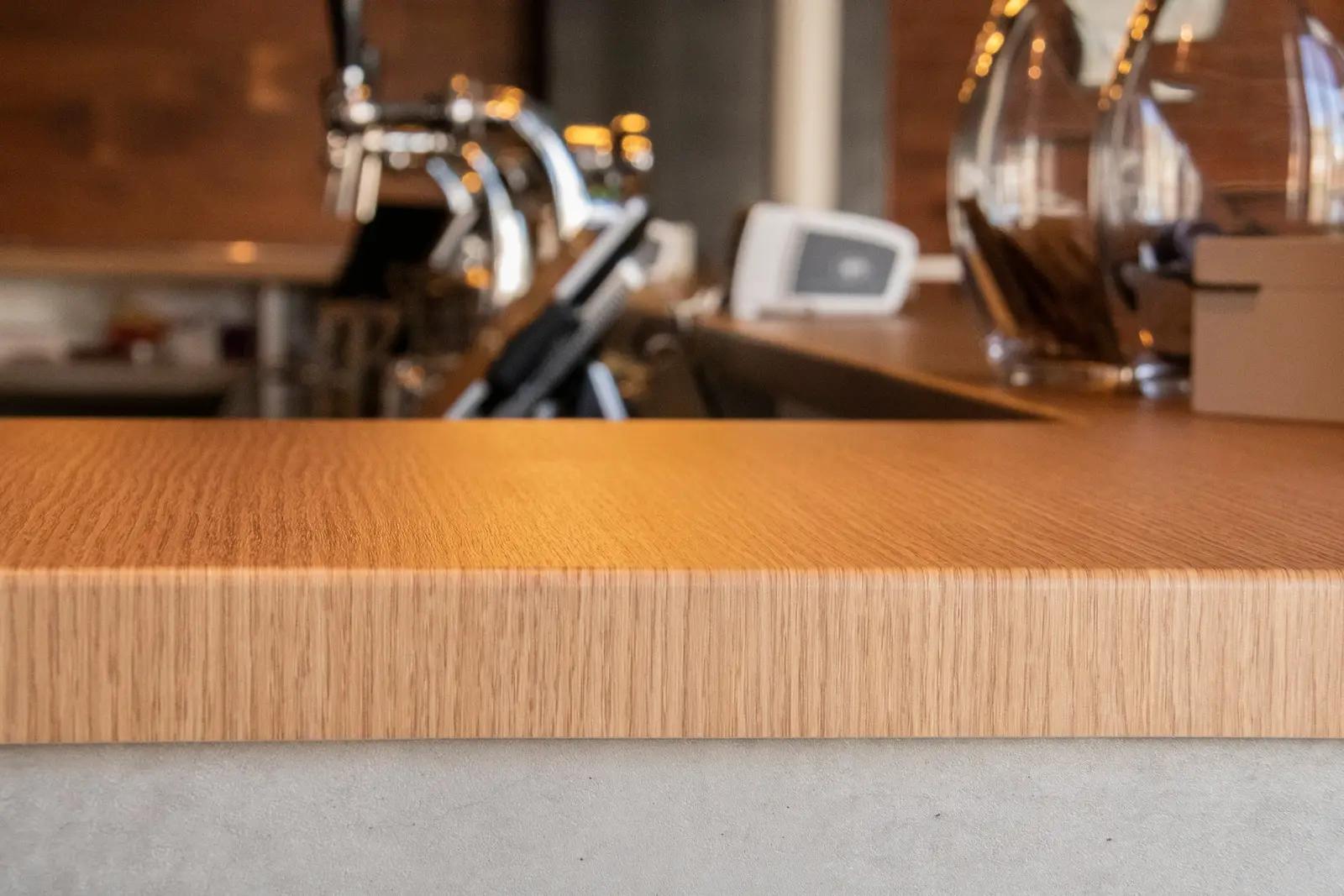
A flat swatch shows colour. A sample around an edge also reveals the direction of the grain, the position of a joint and what visitors will see as they enter. Assess worktops separately. Water, hot objects and routine cleaning place different demands on a horizontal surface. Check that the selected finish suits the intended use.
For an initial assessment, send an overall view, a close-up of the worst corner and a photograph of the back of a door. Tell BlinkOut when the counter needs to remain in service so that preparation and installation can be planned around it.