

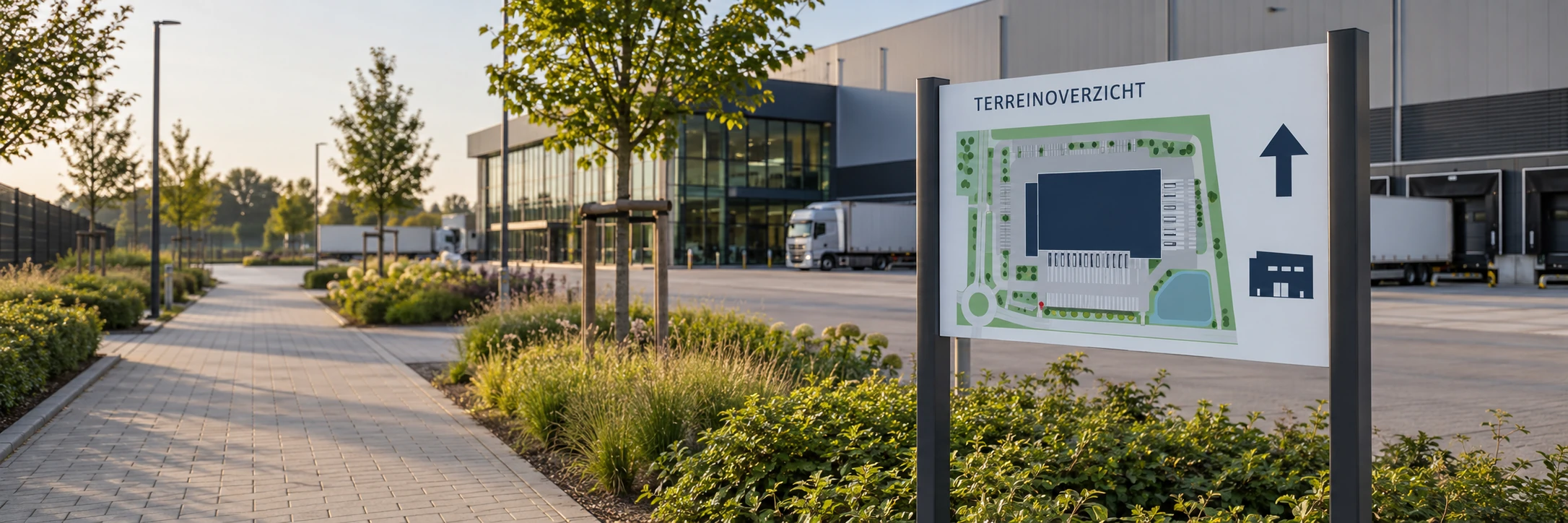
Clear information. Suited to the demands.
Durable signs.
For clear routes, an identifiable site and information that stays useful. Choose ultra-durable HPL panels, durable printed aluminium or more economical Dibond signs with direct print and a protective coating.
For Safety & Logistics
The right sign starts with its setting.
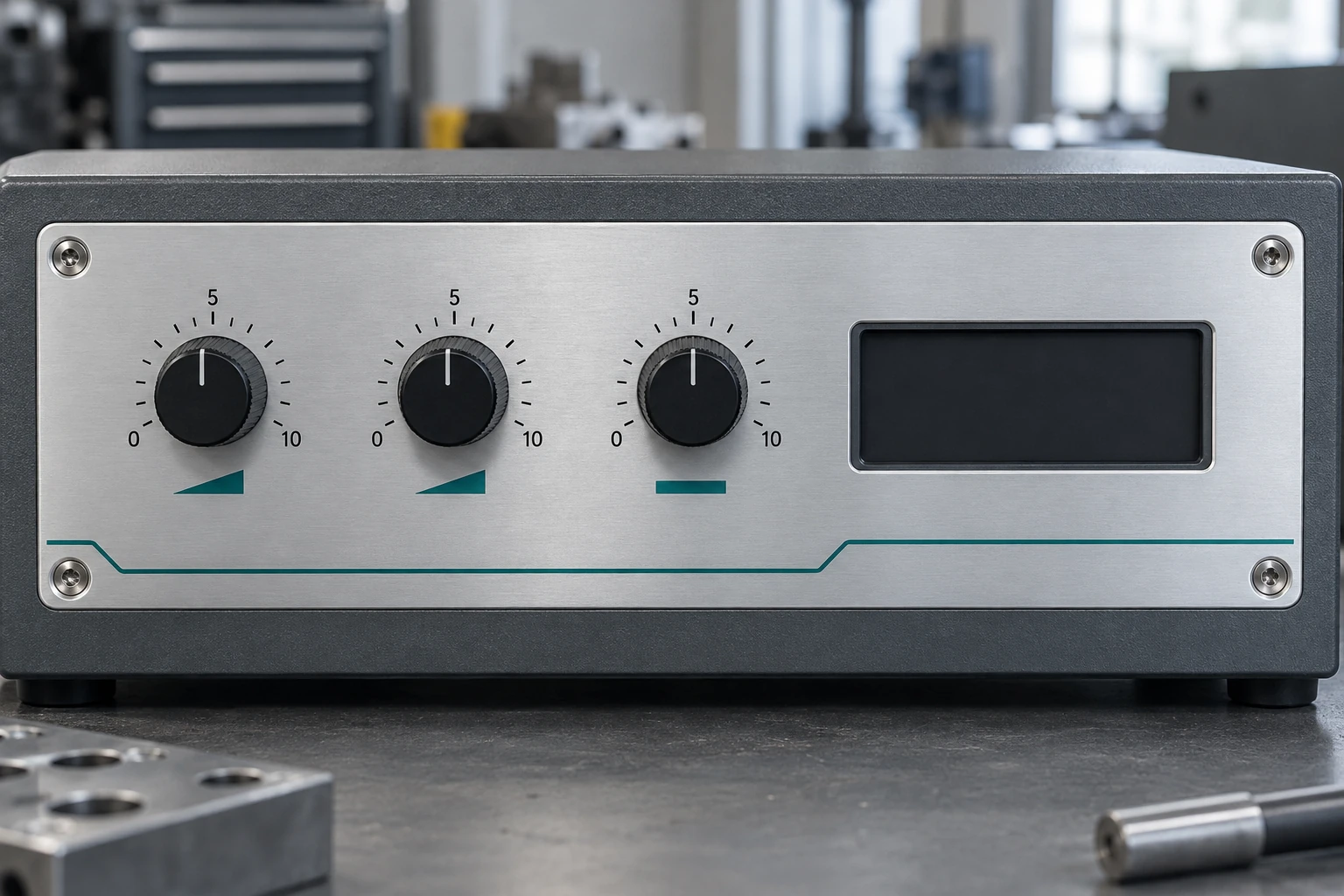
A direction sign at the gate serves a different purpose from an instruction panel at a workstation. How often people touch it, how it is cleaned and how long the information stays unchanged help determine the right specification.
BlinkOut helps you choose the material, viewing distance, content and fixings together. We compare the investment with the intended use so you select the properties your site needs.
Choose your specification
Three ways to give information a sturdy base.
The print technique and panel construction vary between materials. Here are the main differences; the two specialist options also have their own product pages.
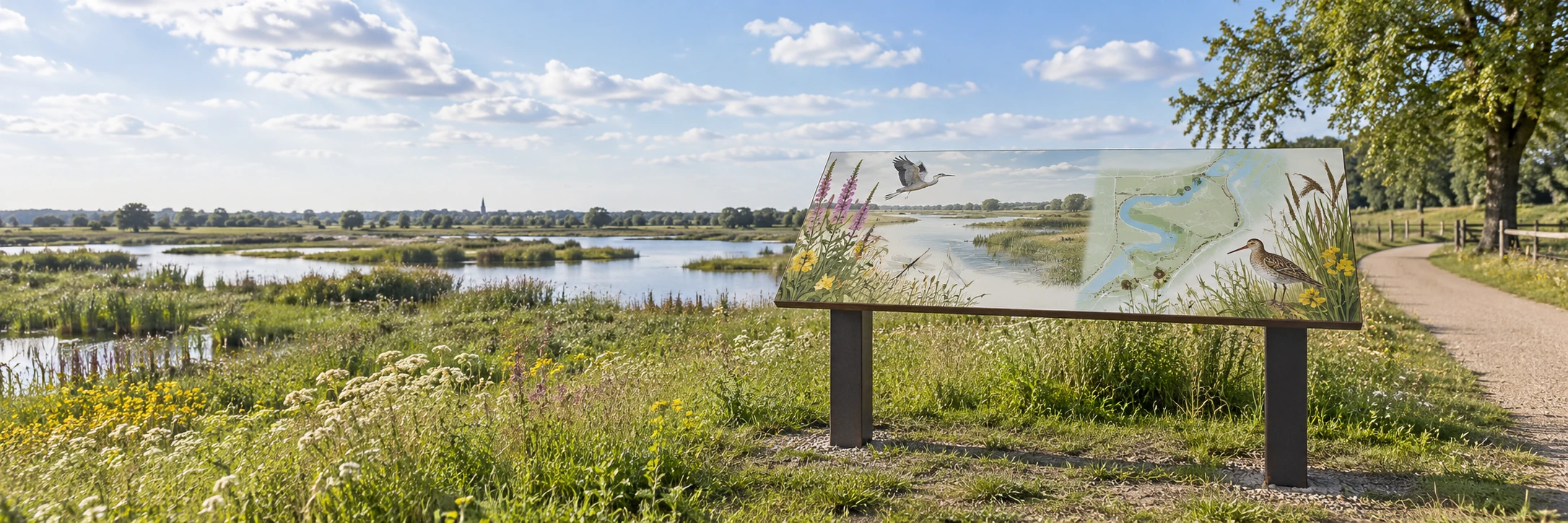
For heavily used locations
Ultra-durable HPL panels
A compact solid-core laminate with the design pressed into the panel during manufacture. For information panels exposed to frequent contact and outdoor conditions.
- Image integrated into the laminate
- Shape, thickness and edges agreed to suit
- Wear-resistant surface for regular use
Worth considering for Public sites, leisure, educational signs and frequently used information points.
Explore HPL panels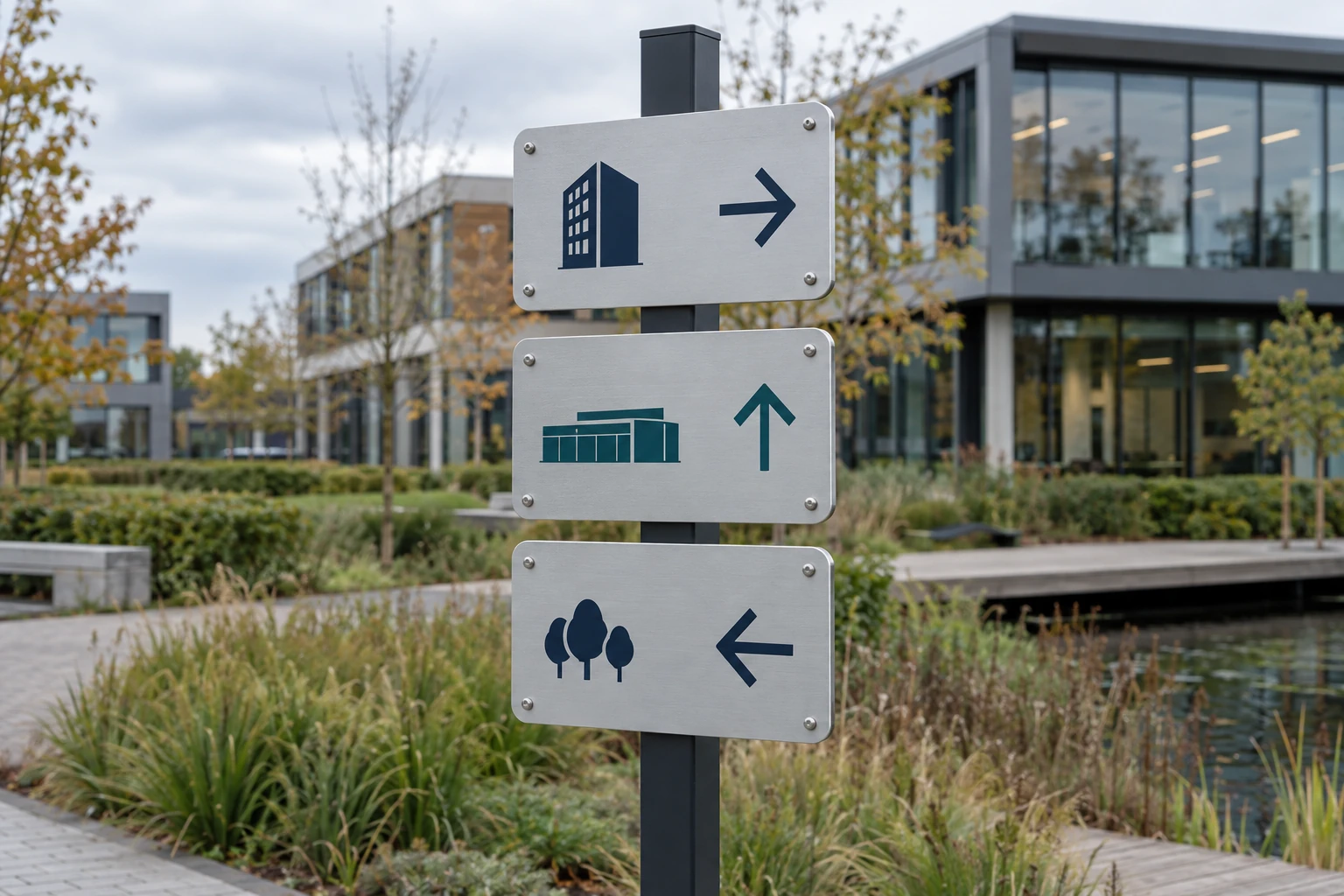
For a metal finish and detailed information
Durable printed aluminium
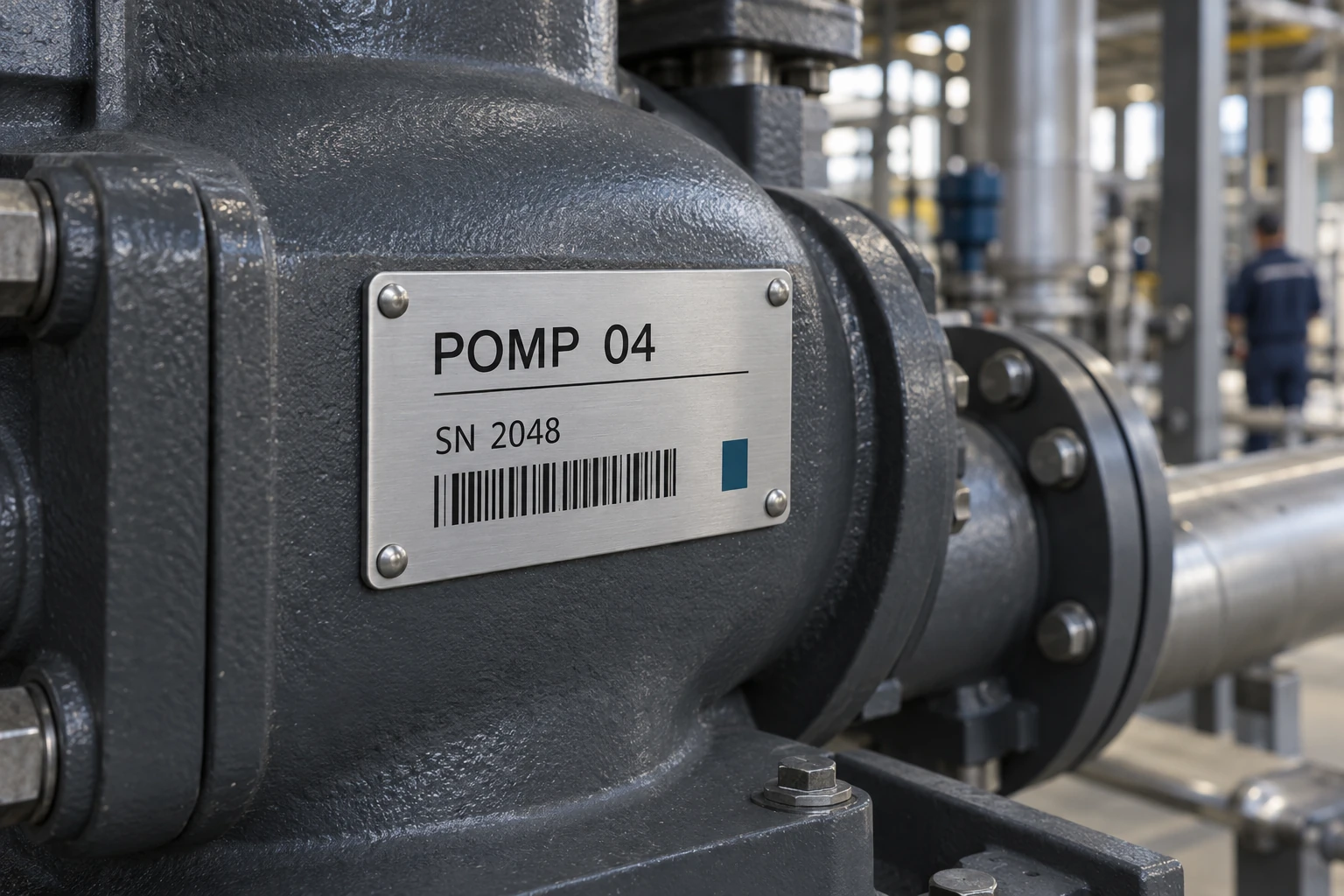
The design is introduced into the anodised layer of solid aluminium, which is then sealed. For clear routes, equipment details and a refined metal finish.
- Print protected within the anodised layer
- Variable numbers and barcodes possible
- Unprinted areas retain their aluminium colour
Worth considering for Industry, maintenance teams, equipment identification and business wayfinding.
Explore printed aluminiumMore economical starting point
Dibond with print and coating
An aluminium composite panel that is directly printed, then finished with a protective coating. A more economical choice for standard signs and site information.
- Direct print on the panel surface
- Aluminium outer sheets with a composite core
- Coating and fixings matched to the setting
Worth considering for Business sites, direction and instruction signs, and larger series with a defined budget.
Discuss Dibond signsCompare materials
Which properties matter for your sign?
Compare by function and use. The final price also depends on size, quantities, machining and installation.
| Specification | Panel & print | When to consider it | Investment |
|---|---|---|---|
| HPL panels | Compact solid-core laminate with an integrated design. | Frequent contact, lasting information and intensive use. | Specialist specification matched to the demands. |
| Printed aluminium | Solid aluminium with sealed print within its anodised layer. | A metal finish, equipment labels and detailed data. | Specialist specification matched to design and machining. |
| Dibond + coating | Aluminium composite panel with direct print and a protective coating. | Standard site, direction and instruction signs. | More economical starting point for regular signage. |
Clarity for people on your site.
Sites & logistics
For entrances, reporting points, loading areas and pedestrian routes. Consistent layouts help drivers, staff and visitors find their way.
Workstations & equipment
For instructions, identification and information beside machinery or storage. Viewing distance, dirt and cleaning help determine the material.
Public places & leisure
For trail maps, interpretation panels and facility information. We match the specification to accessibility and visitor use.
The more economical specification
Dibond, directly printed and protected.
For this specification, the print is applied directly to the composite panel. An additional coating protects the printed surface within the properties of the selected system. We agree that finish to suit your use.
Panel and support
Size, wind loading and fixings determine panel selection and any additional support. We also consider corners and fixing holes.
Coating and maintenance
Discuss cleaning products and the risk of damage beforehand. A standard coating does not automatically provide an anti-graffiti guarantee.
A practical investment
For regular signs, this is the more economical option alongside the two specialist materials. We compare equivalent dimensions and installation requirements.
Choosing for lasting use
Consider use, maintenance and replacement.
Keep information useful
Clear layouts and suitable contrast help the message stay legible. Match the intended service life to how often the content changes.
Plan for removal
Removable fixings can simplify replacement and reuse of supports. We consider the sign and its structure together.
Choose appropriate processing
Aluminium, HPL and composites each need an appropriate end-of-life route. A long service life does not prove a particular recycled content or carbon benefit.
From a signage requirement to the right specification.
- 01
Setting & requirements
Share photos, quantities, content and the intended sign locations.
- 02
Material & design
We compare the three options and agree layout, size and finish.
- 03
Approval & production
After approval, we prepare the selected panel, print and machining.
- 04
Delivery & installation
We arrange delivery or installation and discuss maintenance and replacement.
From one direction to an entire site
Which signs does your site need?
Send photos, a drawing or a list of signs. BlinkOut helps you balance appearance, resistance and budget.
- Location, dimensions and quantities
- Text, pictograms and viewing distance
- Cleaning, fixings and intended service life
Request your proposal
Questions about durable signs
Which specification is more economical?
For regular signs, directly printed Dibond with a coating provides a more economical starting point alongside HPL and printed anodised aluminium. Project pricing depends on size, quantities, finish and installation.
Is the printing the same for all three?
No. The HPL design is pressed into the laminate. Printed aluminium holds the colour within a sealed anodised layer. Dibond is printed directly on the surface and finished with a coating.
Which material lasts longest?
That cannot be fairly determined without knowing the application and conditions. We consider outdoor exposure, use, cleaning, damage risk and how long the content stays current.
Can you provide safety signs?
Yes, we work from the required content and arrangements for your site. Material choice alone does not demonstrate pictogram compliance or validate an entire safety plan.
Can I combine materials on one site?
Yes. For example, a specialist information panel at a heavily used location and coated Dibond direction signs elsewhere, all with consistent design.