

Office privacy film: what can a passer-by see after dark?
Compare frosted film and self-adhesive voile. Use two sightline diagrams to position a privacy band, then test the view from outside with the office lights on.
The meeting runs late. The lights are on, the street is dark and a screen faces the window. Can somebody on the pavement read it? That is the moment to assess office privacy film. The same window can look quite different on a bright afternoon.
Which film limits the view inside?
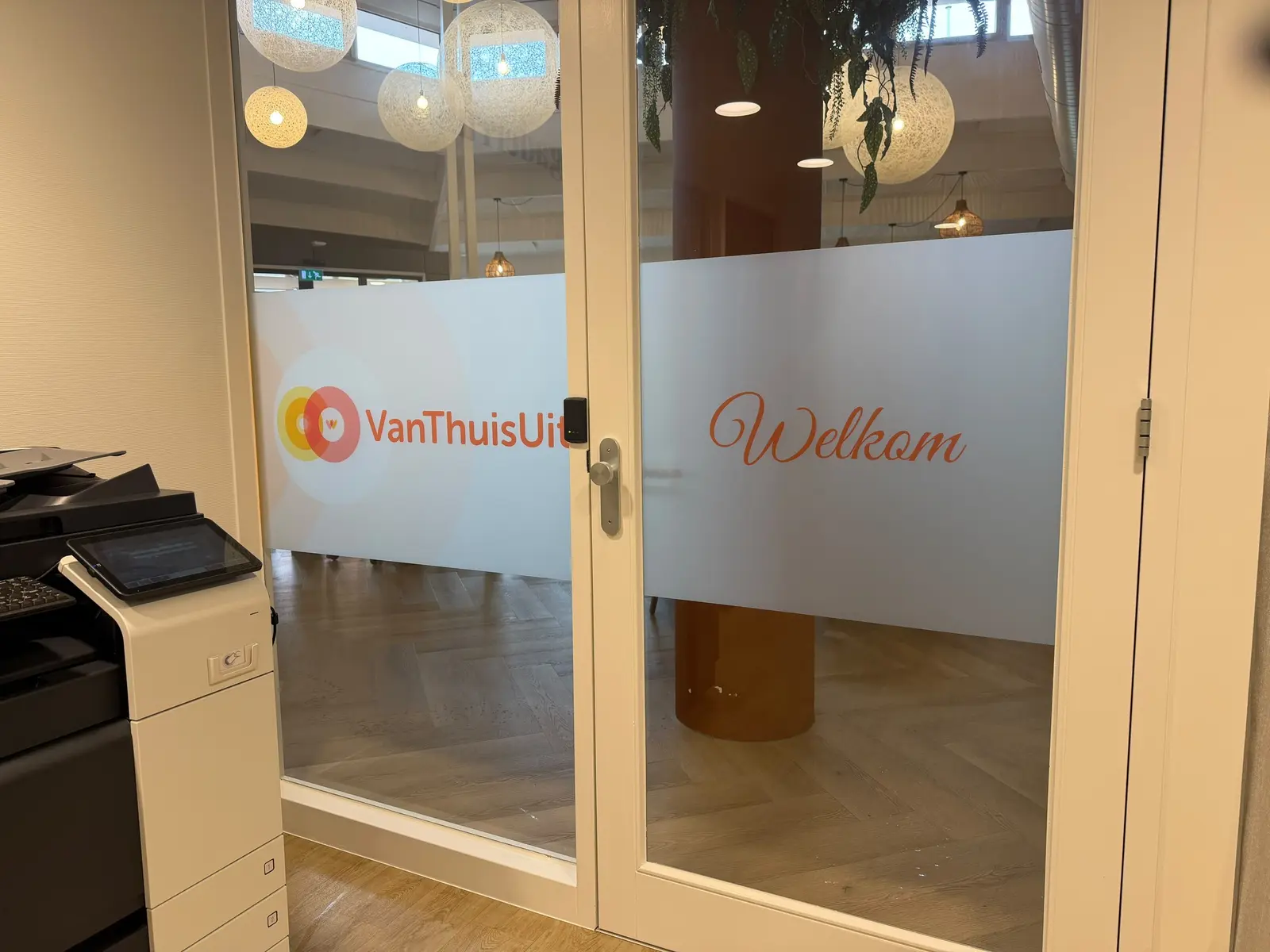
Frosted film scatters light and softens detail behind the glass. It suits meeting rooms that still need daylight, although a person standing close to the pane may remain visible in silhouette. To conceal paperwork or a screen, use an opaque panel across that particular sightline. Other parts of the window can stay clear.
One-way vision graphics contain small perforations. In daylight the graphic can be visible from the street while people inside can see out. Once the office is brighter than the street, passers-by may see further inside. Try a sample under the lighting conditions in which privacy matters.
How high should the band sit?
Sit opposite the screen and ask a colleague to walk along the corridor. Repeat the check from the pavement. A strip placed at standing eye level indoors may miss the screen entirely when viewed from lower ground outside. Mark both edges with removable tape and check the neighbouring pane as well.
Self-adhesive voile: a softer view by day, visibility from outside at night
Someone working beside a window may want fewer glances from the pavement and still want to see a visitor approaching the door. Self-adhesive voile is worth considering here. This finely woven textile sits directly on the glass. Look closely and you can see the weave. Step back and the pane takes on the soft appearance of a sheer curtain, while the sill stays clear of fabric and there is no track to fit.
In daylight, a bright street and a comparatively dark interior help limit the view into the room. After sunset the balance shifts. With a pendant lit above the meeting table, a passer-by on a dark pavement can see through transparent voile into the office. The denser SQUID weave obscures more detail, but shapes and movement can remain visible. Decide what actually needs to be private. A softened view may suit a staff kitchen. A consulting room used for confidential evening appointments calls for a separate test with the indoor lights on.
To keep a continuous textile finish across the frontage and close off the view at night, combine the textile with curtains that close fully or a suitable internal roller blind. If only one monitor is exposed, try turning it through a quarter turn first. This can take the information out of the sightline while the person at the desk keeps their view.
Draw the sightline before ordering the film
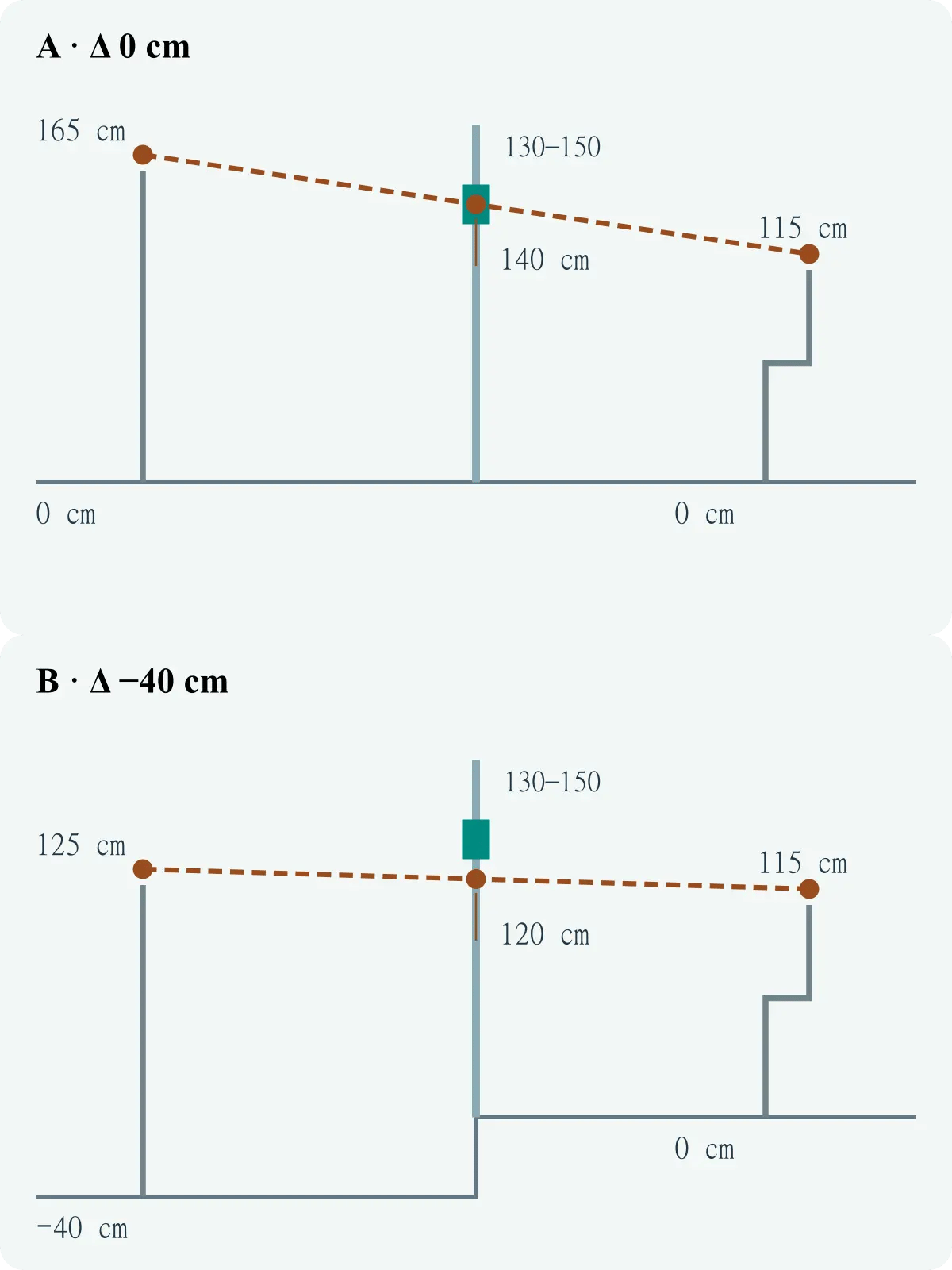
A privacy band needs to cover the point where the sightline crosses the glass. Suppose a passer-by and a seated colleague are equally far from the pane. Their eye heights are 165 and 115 cm above their respective floors. With the pavement level with the office, the line crosses the window halfway between those heights, at 140 cm. Lower the pavement by 40 cm and the crossing drops to 120 cm above the office floor. A band that works on one elevation can sit too high on another.
Try a reading card after dark
Place a sheet with large letters where the monitor normally sits. Turn on the desk lamp and ceiling lights as on an ordinary working evening. Ask a colleague outside what they can make out: movement, a face or the actual letters? Repeat from an angle near the entrance and from close to the glass. Put a temporary sample at the intended height. Each material then faces the same test, without exposing confidential documents or personal details.
A welcome on one door, privacy on the next
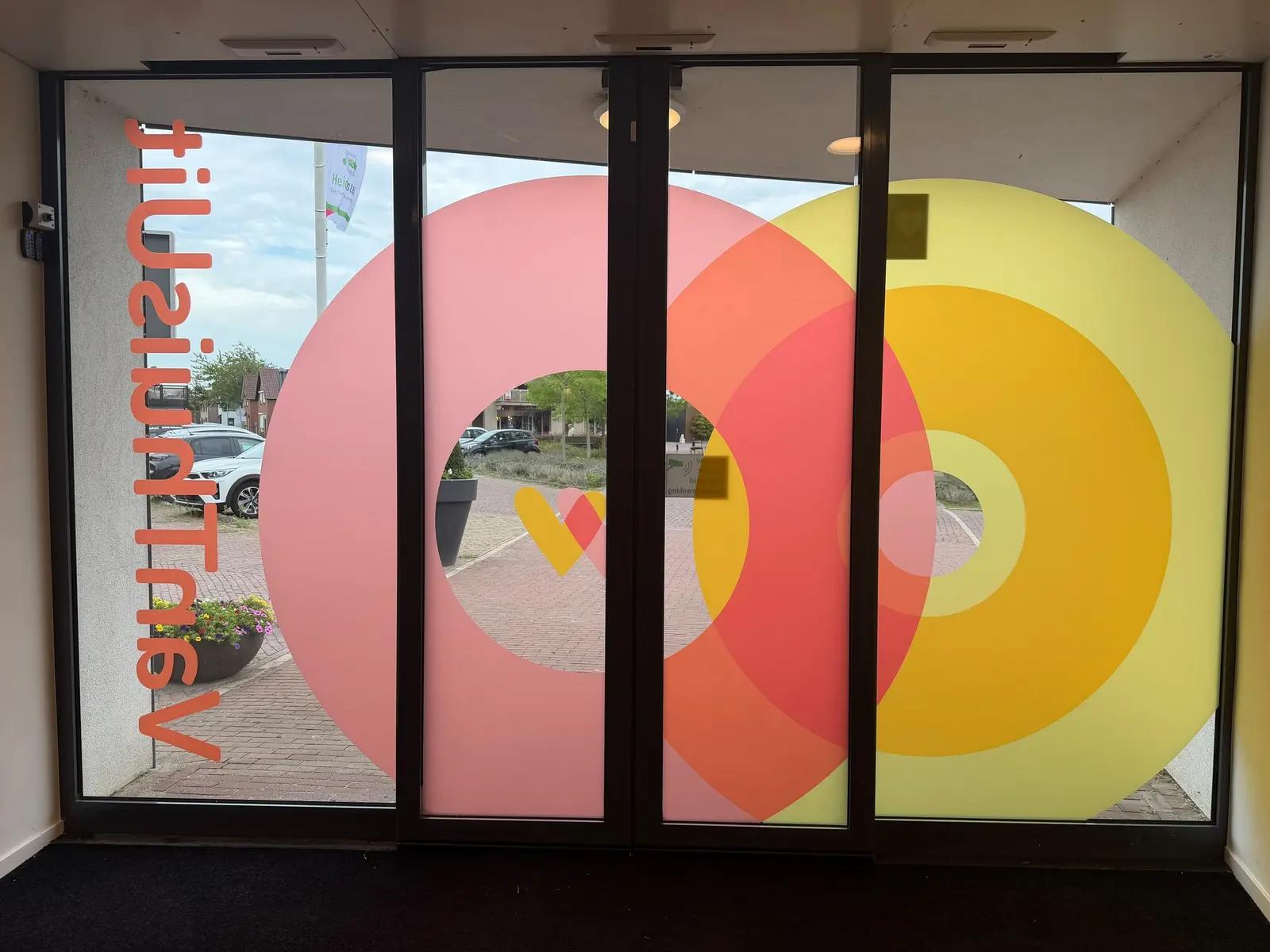
At VanThuisUit, BlinkOut combined printed circles on the entrance glazing with frosted film and a welcome message on an internal door. Each pane serves a different purpose. For advice on yours, send two photographs from the same viewpoint, one in daylight and one with the office lights on. Mark the positions of the table and screen on a floor plan.